
Informações gerais
ID
MOVI-11176
Mostra
Seção
Nome
Capitães de Abril
April Captains
April Captains
Nome original
Capitães de Abril
Direção
País de origem
Sinopse
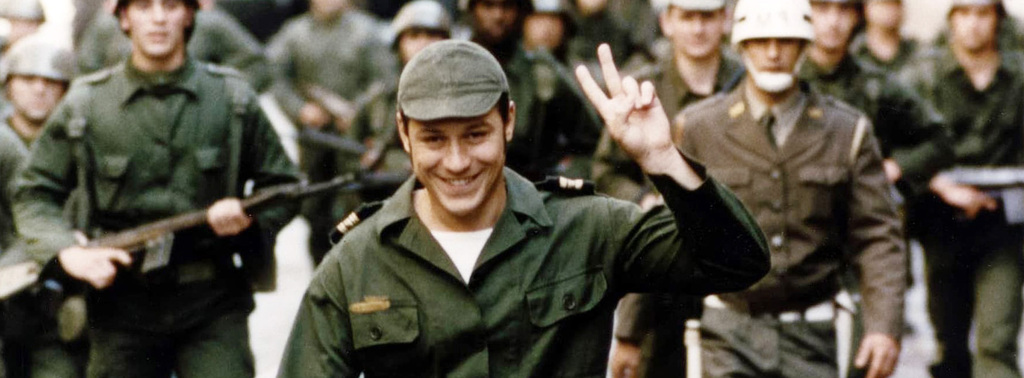
Em Portugal, na noite de 24 para 25 de abril de 1974, uma estação de rádio toca uma canção proibida: “Grândola”. Poderia ser apenas um ato insubordinado de algum jornalista rebelde, mas era, na verdade, o sinal planejado para o início de um golpe de Estado militar que mudaria a face do país e o destino de vastos territórios na África. Ao som da voz do poeta José Afonso, as tropas rebeldes tomam os quartéis. Às três horas da manhã, entram em Lisboa, sob o comando de jovens militares que lutam pela liberdade sem desrespeitar os civis ou fazer uso da violência. Ocorrida logo depois do triste golpe no Chile, a Revolução dos Cravos, em Portugal, se distingue pelo caráter político, mas também pacífico e lírico com que se desenrolou.
Vencedor do prêmio do júri de melhor filme da 24ª Mostra em 2000.

On the night of April 24-25, 1974, in Portugal, a radio broadcasting station played a forbidden song called “Grândola”. This action was not insubordinate but a planned signal for a military coup that ultimately changed the face of the country and the fate of vast territories in Africa. Rebel troops, led by young military personnel, peacefully took over the barracks and entered Lisbon at three in the morning, fighting for freedom without intimidating civilians or resorting to violence. The Revolution of the Carnations in Portugal contrasted with the tragic military coup in Chile, as it was political and unfolded peacefully and lyrically.
Winner of the jury prize for best film at the 24th Mostra in 2000.
Duração (min)
124
Cromia
Descritores
filmes restauradosAssunto
festivais internacionaisAssunto
mulheres na direçãoAssunto
revoluçãoAssunto
históriaAssunto
PortugalAssunto
Gênero
Ficha técnica
Roteiro
Maria de Medeiros, Ève Deboise
Fotografia
Michel Abramowicz
Montagem
Jacques Witta
Som
Mourad Louanchi, Jérôme Thiault
Música
Victorino D’Almeida
Design de produção
Guy-Claude François
Direção de arte
Augusti Camps-Salat
Elenco
Stefano Accorsi, Maria de Medeiros, Frédéric Pierrot, Joaquim de Almeida, Fele Martinez
Produção
Jacques Bidou
Produzido por
JBA Production, Mutante Filmes
Co-Produzido por
Alia Film
Vendas
JBA Production
Assets
Imagem
filme-11176.jpgImagem
Data
2000